


Experts discuss promotion of cybersecurity readiness in quantum era

As quantum computing is advancing rapidly, current encryption methods could be compromised, creating risks for financial systems, banking, and vital digital infrastructure. Experts stressed the need to start preparing for post-quantum cryptography now, rather than waiting for these threats to materialise.
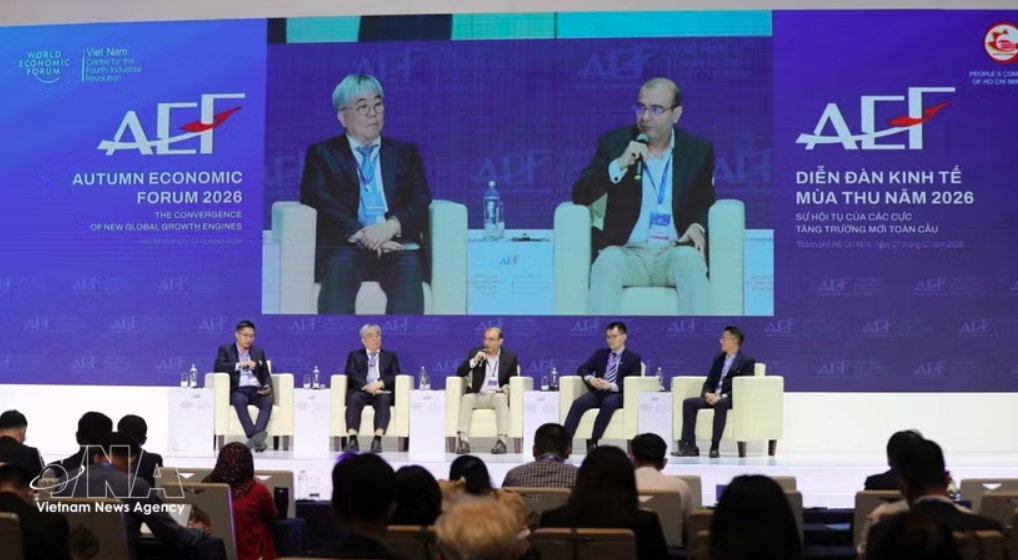
At a thematic discussion entitled “Data safety and security in the quantum era”, held on October 27 as part of the Autumn Economic Forum (AEF) 2026, they said Vietnam, particularly Ho Chi Minh City, needs to build cybersecurity capabilities across critical systems and entire business supply chains. This will provide a secure foundation for digital transformation, strengthen technological self-reliance and reinforce confidence in the digital economy in the quantum era.
Le Quoc Cuong, a member of the Subcommittee for Science and Technology, Innovation and Digital Transformation under the Ho Chi Minh City Development Council, noted the city has organised numerous scientific seminars and connected with academic communities and leading laboratories worldwide to discuss the potential and development orientations of quantum technology, as well as the establishment of a local quantum ecosystem.
Cuong shared data safety and security in the quantum era is vital to the sustainable development of cities in the digital age. Ho Chi Minh City’s proactive approach aligns with the government’s strategic direction, which identifies quantum technology as a core technology requiring priority investment to enhance national technological self-reliance, he emphasised.
With a population of more than 14 million, Ho Chi Minh City is becoming a megacity and serves as the country’s economic, financial and innovation hub. Its operations increasingly rely on big data, artificial intelligence (AI) and digital platforms to support the development of the digital and circular economies, while raising requirements for system safety and security, Cuong said.
However, sufficiently powerful quantum computers could eventually break current encryption methods, challenging financial and banking systems, public services and critical digital infrastructure. Meanwhile, the practice of collecting data now for decryption in the future has become a global concern, he added.
These risks could affect security and defence systems, public administration, healthcare, transport and energy, particularly banking transaction systems and the Vietnam International Financial Centre in Ho Chi Minh City. The transition to post-quantum cryptography is therefore no longer merely a matter of preparing for the future, but an urgent task to safeguard national digital sovereignty and system security, Cuong stressed.
He added that the city needs to establish priorities and adopt an appropriate approach to transitioning to a post-quantum environment, based on the importance of each system, infrastructure component and economic sector.
In this context, moving to post-quantum cryptography (PQC) is seen as an important step forward. However, it involves more than replacing encryption algorithms. Organisations must also review their systems, manage digital certificates, assess risks and develop transition roadmaps tailored to their needs.
From an implementation perspective, Stephen Oh, Vice President and Chief Technology Officer of Korea Quantum Computing (KQC), highlighted three priorities for the transition to post-quantum cryptography.
He said mechanisms are needed to manage costs and resources so businesses can estimate expenses, plan and allocate budgets for the transition. At the same time, small and medium-sized enterprises should be given access to appropriate security solutions. These businesses play a crucial role in supply chains, and if they can’t effectively safeguard their systems, ensuring the security of the whole chain will be challenging. Pilot programmes will also help businesses test solutions and build confidence across supply chains. Models such as centralised key management, shared digital signature services and cryptographic migration solutions should be tested and assessed for effectiveness before being scaled up, he said.
On domestic technology research and development, Vo Van Tuan, Director of the Quantum Laboratory at FPT Group’s Institute of Quantum, Artificial Intelligence and Cybersecurity, said the unit aimes to master core technologies.
He said the newly-established Quantum AI and Cyber Security Research Institute (QACI), which brings together laboratories specialising in quantum technology, cybersecurity and AI within a single system, is intended to facilitate research into and testing of new technologies. These include AI in cybersecurity and security solutions for technological infrastructure.
For post-quantum cryptography, FPT is taking a proactive approach to risk assessment based on the assumption that future quantum algorithms could break some existing cryptographic mechanisms. Research and preparations for countermeasures should therefore be undertaken before these threats become urgent, Tuan said.
In addition to the transition to post-quantum cryptography, the institute is exploring other approaches, such as quantum key distribution (QKD), while conducting research and international cooperation to build capacity in the field.
Experts said cybersecurity in the quantum era is not merely a technological challenge, but also involves transition costs, implementation capacity and coordination among economic stakeholders.
For Ho Chi Minh City, early preparations will be crucial to protecting digital infrastructure, strengthening confidence in financial services and establishing a secure foundation for the development of the international financial centre.

Autumn Economic Forum 2026 explores new drivers of growth through 16 sessions
VOV.VN - The second day of the Autumn Economic Forum 2026 in Ho Chi Minh City on October 27 features 16 thematic sessions focusing on new growth drivers, shifts in global value chains and the role of technology in enhancing competitiveness.

